

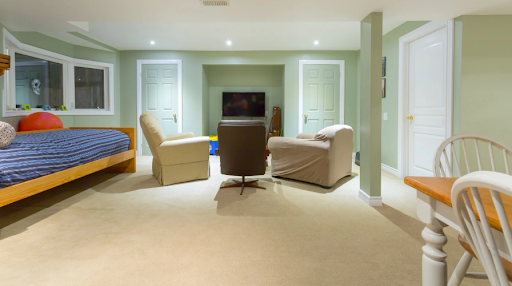
Basements can feel a little tricky when it comes to color, but the right paint choices make a huge difference. Because these spaces often have limited natural light, paint can either lift the room or make it feel closed in. A thoughtful color plan also helps your basement feel connected to the rest of your home. When paint is chosen with lighting, ceiling height, and room purpose in mind, the space becomes more welcoming and functional. If you are planning basement finishing in Canton, professional guidance on color selection can help you avoid costly repainting later and get a polished result from the start.
Start with the Basement Lighting Reality
Basement lighting is rarely the same as upstairs light, so paint has to be chosen for the light you actually have, not the light you wish you had. Even a beautiful shade can turn muddy or dull if it is not tested under basement conditions. Warm white bulbs, recessed lighting, and window wells all change how color reads on the wall. That is why professionals often evaluate lighting first, then recommend a paint direction that works with it.
A helpful rule is to lean toward colors that reflect light well. Soft neutrals, pale earth tones, and gentle pastels can make the space feel brighter without looking sterile. If you want deeper colors, they usually work best as accents rather than full wall coverage.
Test Colors the Right Way
Paint samples should be viewed on multiple walls and at different times of day. Basements can shift from cool to warm depending on artificial lighting, so a color that looks perfect in the morning may feel too dark at night. Pros often use large sample boards and move them around before finalizing a palette, giving you a clearer sense of how the finished room will feel.
Match the Color to the Basement Purpose
A basement used for relaxing, hosting, or family time benefits from warm and inviting tones. A space meant for work or exercise may feel better with cleaner, lighter shades that keep the mind alert. Paint should support the way you plan to use the room, not fight against it.
When remodelers design the space, they can help align color zones with layout features. That keeps the basement from feeling like one long tunnel and instead gives it the structure of a main-floor living area.
Balance Comfort and Style
If you want a cozy effect, consider warm grays, greige tones, or soft clay colors. For a more modern look, light taupes, muted blues, or gentle sage greens are popular choices. These shades add personality while still bouncing light around the room. A professional can also help coordinate paint with flooring, trim, and built-ins so everything feels intentional.
Watch for Color Choices That Shrink Space
Dark paint is not always wrong, but it needs careful placement. In a basement with low ceilings or narrow rooms, deep shades on all walls can make the area feel smaller. Instead, use darker colors on one feature wall, in a bar nook, or behind media shelving. That gives depth without closing the room in.
This is also where understanding basement finishing mistakes to avoid really matters, since paint choices are often rushed at the end of a project. If color is not planned early, the basement may end up feeling darker than expected, even with great finishes elsewhere. Having a professional plan avoids that last-minute scramble and ensures the paint supports the design.
Use the Ceiling to Your Advantage
Painting the ceiling a bright white or a slightly lighter tone than the walls can visually lift the space. If the ceiling has soffits or beams, pros may recommend keeping those the same color as the ceiling to reduce visual clutter. The goal is a clean overhead line that makes the room feel taller.
Coordinate with Existing Home Colors
A basement does not have to match your upstairs exactly, but it should feel like part of the same home. If your main floor uses warm neutrals, carrying a related undertone downstairs helps with flow. If your home is cooler in style, keep that subtle coolness in your basement palette too.
Professionals often build a basement color scheme from your existing finishes, then add small shifts to suit basement lighting. This approach keeps it cohesive while still giving the lower level its own identity.
Conclusion
Choosing paint colors for a basement is about more than picking a shade you like. It is about working with limited light, matching the purpose of the space, and avoiding tones that make rooms feel tight or gloomy. When color is planned alongside layout and lighting, the basement becomes brighter, more comfortable, and better connected to the rest of your home. A professional eye helps ensure your final palette feels right in real conditions and stays satisfying for years.